What motivates me in my work is, and that has been the case since I was attracted towards biomedical engineering, is basically improving people's lives. I think I feel very lucky to be in position where I can use use my skill set to bring about improvement in general quality of life of people, especially who need them most you know neurological disorders can be very debilitating for people who have them, you know stroke is severe, spinal injury severe, so that changes your life significantly and if I can or my team can bring about positive Improvement in in their lives and hence their families lives I think that is a societal contribution a meaningful contribution I think I'm making to the society.
I've been genuinely fascinated by Academy's approach and I think it's genuinely unique in among senior academies of United Kingdom where Academy make a lot of effort in connecting beyond sectors. There are quite a few different initiatives which are very unique to Academy of Medical Sciences, trying to bring in NHS, clinicians and researchers and industry together which is what we need at the moment.
I was always interested in doing research. I wanted to do PhD and that's what attracted me, the quality of UK education, and inventions, innovations coming out of UK. For some reason when I was doing undergrad I came across the so-called elective modules of biomedical instrumentation and since then I really like the idea that you can use your engineering skills to improve people's lives through the healthcare system whether that is diagnostic device or rehabilitation or treatment device.
The neurological disorders which me and my team are currently focusing are mainly stroke and then spinal cord injury. We are also working on cerebral palsy and Parkinson's and one of the main reasons to work on these is because stroke is a huge problem across the world, just millions of people suffer stroke and every year that number keeps increasing and it's quite debilitating so that's why stroke is one of the main area of focus. And then spinal cord injury and cerebral palsy, the reason for working in those areas as well there is quite a bit of similarity, obviously these are different disorders and conditions, but they're from engineering point of view there is quite a bit of similarity in terms of the issues which you are trying to address across these different patient groups.
We are currently working on three devices and one device is to improve the touch sensation of the upper limb touch sensation of people with stroke and people with diabetic neuropathy. The second device we're working on is to relieve so-called severe muscle stiffness called spasticity. That is for stroke and spinal injury and cerebral palsy. And the third device is again is for spasticity but here it is not a treating device it's a monitoring device where we are trying to remotely monitor changes in this plasticity in patient.
When you lose or you have significant loss of touch sensation they aren't able to feel simple objects or perhaps maybe there is lots of sensation in touching someone. Bringing back that sensation or you know improving on that sensation would be helpful for them and crucial for them so I think that would be useful definitely useful for patients and that's what the feedback says.
Both the touch sensation improvement device and the muscle stiffness relieving device both of them have shown really positive results. That sensation device has improved their touch ability after a few minutes of stimulation by you know 20 to 30 percent on average. That's a significant gain and the patients in general were quite amazed to know that it's just a tiny mechanical stimuli. Vibrations can do you know something like magic to bring back the sensation so that was something which they found really interesting. And then spasticity device also we found improvement in their functional ability so that their muscle stiffness spasm is relieved. But not only that they were able to do much of their activities through their using their hand or arm so we've seen good outcomes from both of these devices in patients. And the third one is in still early phases is still in development.
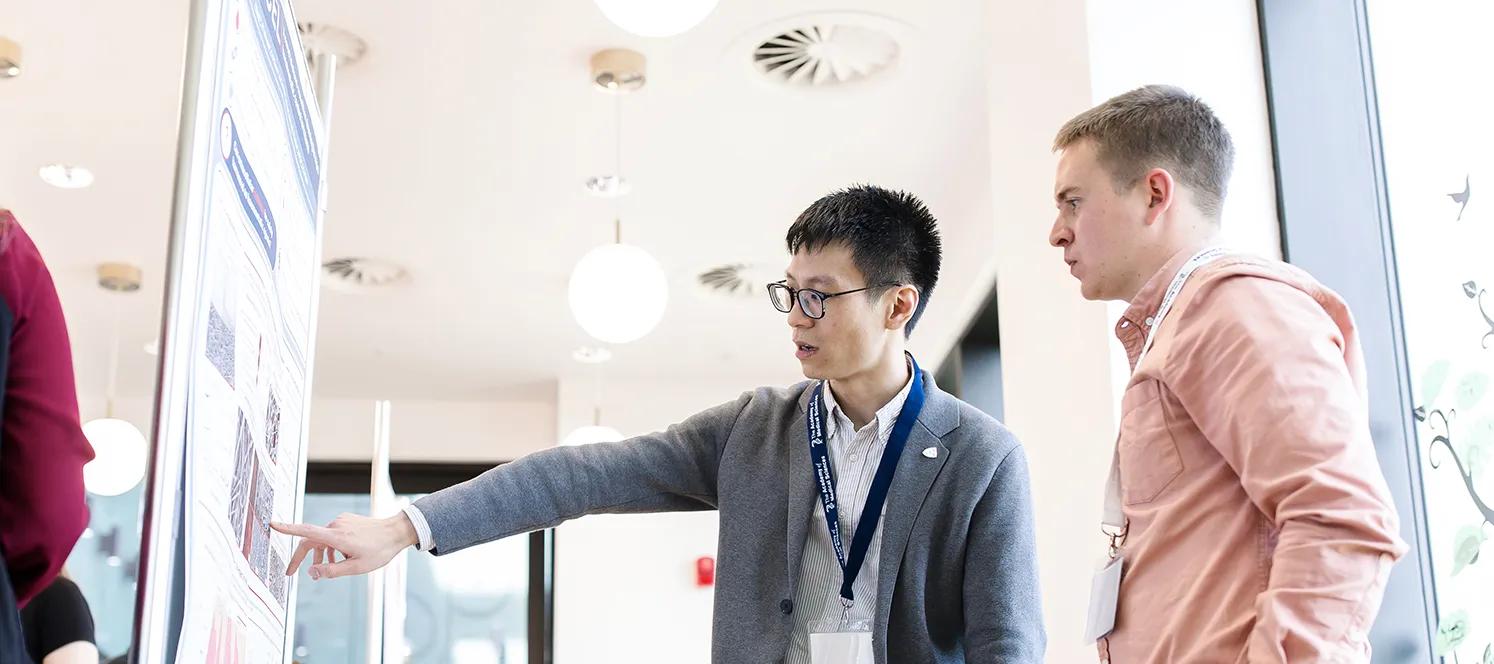
Now everything is so interdisciplinary and you cannot be expert in everything, you know I can be barely expert in one thing, so you definitely need collaborations and especially when you're working across sectors, you know neuroscience, neurology, engineering, computer science, social aspects of your application, of your engineering, so you need to collaborate with different individuals so that you understand different elements of the problem you're trying to solve.