When I was a cancer researcher I always said that we should be there to put ourselves out of a job. That we would have described all the different types of cancer and we'd have a treatment for all of them.
And I still think that should be a vision for for many of us, that we should be documenting diseases, developing treatments and ultimately finding ways to prevent disease and then to focus on wellness and longevity in the future. I still think that's a valid vision and I would like to see it realised in my lifetime.
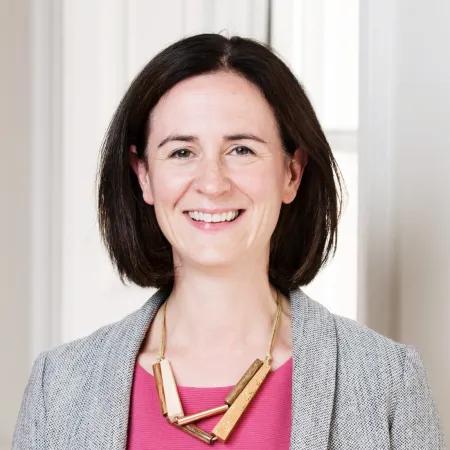
I'm Julia Wilson and I'm the Associate Director at the Wellcome Sanger Institute in Cambridge. I suppose I've always loved science and I'd set myself an ambition to become a scientist. I was the first person in my family ever to go to university, I'd done a scientific degree, I'd done a PhD, I was working as a scientist, and then I realised gradually that I wasn't particularly happy on the bench, working on the bench.
Science is great career but there's limitations to it. But I did love talking about science, I loved having meetings about science, I loved bringing people together and so I looked for roles that really ticked those boxes but kept me close to science.
And when I moved into research management I went to a small cancer charity and I actually learned more about cancer working there than I'd ever done as a cancer research scientist, because you start from a much more holistic point of view rather than just looking at your molecule and going deeper and deeper and deeper into your molecule.
I think the barrier I faced was I just didn't know where to turn or what routes were potentially open to me. I did find a role and I've been hugely happy and successful so that's great, but I do use my time now pointing out to scientists that there are other science-aligned careers where you can still make a difference every day.
At the moment we're seeing genomics in medicine and that's fabulous. Since the human genome was first sequenced that was the ambition to understand health and disease and to apply that knowledge for better diagnosis and better treatments.
Where genomics can take us now is looking at our custodianship of the planet, maybe using it for climate change. An area where genomics has not yet really penetrated is into mental health and disease. So there's so many opportunities for genomics in the future.
Collaboration is really important to me, but it's so important for science because the questions, the scientific challenges we have are too big for any one individual scientist to solve. And I found over the years scientific problems are so much easier to solve if you've got a range of different scientists, different skills, different experiences all tackling the same problem from different angles.
I took part in the Academy of Medical Sciences' FLIER programme and joined in 2020. FLIER is Future Leaders in Innovation, Enterprise and Research, and brings people from different backgrounds, from the NHS, from academia, from businesses and policy makers, and brings us all together on an immersive leadership programme.
The FLIER programme really highlighted to me that leadership comes in different flavours. It really is being your authentic self, being very clear on your vision and your values, and enabling and empowering your team to develop and and align to that vision
that you set.
My views on leadership have been shaped by the FLIER programme: that it is possible to be a quiet person and a leader, it's possible to be a non-scientist and lead scientific organisations and it's possible to take expertise into different sectors, so I think my views of leadership have really been shaped and informed by FLIER and I still benefit from from that every day.
We need to have a culture where it's possible to move between academia and commercial and back again, and to have more clinically trained scientists, more scientists working into the NHS as well, because ultimately we're all here to deliver, hopefully, better patient outcomes or benefit to society generally, and we do need to be better at working together and delivering for patients.
The Academy of Medical Sciences has been great, I'm now part of the family and I've been introduced to so many other aspects of the Academy's work. I've been fortunate to participate in some debates about equitable collaborations working with the policy team, shaping some of the asks to government, and the mentoring programme is a fantastic asset both for mentors and mentees. So yes I really feel part of the Academy of Medical Sciences family.
My vision for genomics research is that society will benefit in so many ways from genomics. I think we're still at the beginning of an amazing journey, but that journey does mean that we have to bring public and patients along with us and to make sure that the benefits of genomics can be realised by all communities, not just in the global North, but we are extending the benefits and the opportunities to everyone.